Our Location
5th Floor, Huake Center, Lanshan District, Linyi City, Shandong Province, China

5th Floor, Huake Center, Lanshan District, Linyi City, Shandong Province, China
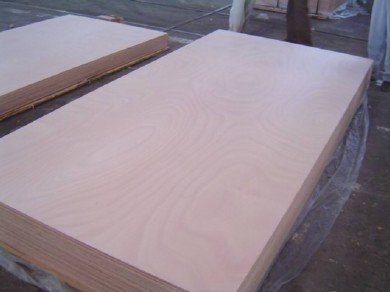
Builders ask can construction plywood get wet because almost every structure sheds rain before the roof closes. The honest answer splits the panel: an exterior-bond sheet survives wet events, an interior-bond sheet does not, and every panel fails fastest at the cut edge and the exposed face. This guide explains bond classes, how damage shows, and the drying and sealing habits that keep a wet panel usable.
Definition: waterproof bond means the adhesive holds the plies together through wet cycling, and it is the glue line rather than the surface that decides whether a construction panel survives rain on site.
Construction plywood divides into interior, moisture-resistant, exterior, and marine bonds, and the gap between them shows up in the first soaking. An interior sheet wicks rain, swells at the edge, and unlocks the glue line in days, while an exterior sheet takes the same water, dries back, and keeps its rating. The face often looks similar, so buyers read the stamp and the plate, not the veneer.
The exposure marking travels with the sheet through the whole construction cycle. A bundle that enters the yard as exterior stays wet-tolerant all the way to the roof close, while an interior bundle needs a closer seat until the building is dry, so the buying line separates the two before the first rain falls.
A site that names its exposure on the order form removes most of the risk. Roof decks, wall sheathing, and subfloors that meet the weather while the cladding goes up carry the exterior line, and the interior rooms fill from the same takeoff at a different price point.
The stamp packs the whole story into a short line. Exposure, bond class, and species group ride together on the sheet edge, and an exterior or marine class on the same line as the structural rating tells the site which bundle may meet rain. A plate that lists interior or MR should stay under cover until the building is dry.
Reading one sheet tells the story for the bundle. The mill mark, the bond class, and the rating print on each edge stamp, so a night-shift worker or a receiving clerk checks one sheet and trusts the rest of the lot to the same plate.
A quick edge check reads the whole plate. Crosscut a corner, look at the bond line and the veneer count, and the exposed edge tells whether the bundle holds the promise the stamp makes, so the receiving check starts at one crosscut rather than a full unstrap.
Water attacks the panel in order. The face absorbs first, the cut edge wicks faster, and the swell starts at the joint lines, then the glue line softens and the plies separate at the corner. Damage always announces itself at the place the water entered, so the inspection follows the same route.
The damage trail always starts at the entrance. A panel that comes in from the edge wet dries from the edge, and a panel that sat in the weather face-up shows its first swell across the top veneer, so the inspection matches the story to the resting position.
Not all wet panels fail the same way, because water finds three doors in the same sheet. The cut edge opens the fastest path, the drill hole takes the second, and the saw-cut face takes the third, and a panel that survives a good drenching usually loses at one of those three points rather than across the whole face.
The face story separates the film sheets from the bare ones. A film faced panel sheds rain on the faces and concentrates the exposure at the cuts, while a bare veneer sheet takes the moisture across the whole surface, which is why wet-friendly specs pair an exterior bond with a sealed or filmed face.
The three doors also set the sealing order. Edge sealer closes the first door, primer and wax on the drilled bores close the second, and a face coat or a film closes the third, so a dry panel is a well-specified panel as much as a well-stored one.
Handling closes a quieter fourth door. Panels that drag across a dusty slab gather grit that holds moisture at the face, and panels that lean against an exposed wall wick from the bottom edge, so the flat, covered stack earns its place in the site rules.
A wetted panel changes dimension before it changes colour. The plies swell a measurable amount across the length and width, and the bump stays even after the panel dries back, so a floor or roof that swelled in the rain rides uneven after the spring heating season. The visible cost is the flatness the finish never regains.
| Condition | What you see | What it costs |
|---|---|---|
| Wet then dried promptly | Slight edge grain | Seal and reuse |
| Wet and left loaded | Edge swell and bow | Framing rework |
| Wet repeatedly | Face checking, glue break | Panel replacement |
Checking costs real money on a schedule. A roof deck that swells at every seam telegraphs into the felt and shingles, and a subfloor that bows under the adhesive shows through tile, so the site that lets panels soak pays twice, once in the sheet and once in the finish callback.
Rework follows the same order as the damage. A swelled edge is cut back, sealed, and re-fixed, a bowed panel moves to a wall location that tolerates the bow, and a delaminated sheet leaves the bundle for the skip, so the salvage decision ranks the panel by its next service.
The cost ledger runs the same story. A sheet that saved a few cents on the interior bond can burn the full panel price and a day of re-flooring, so the interior recommendation on a wet site lands far outside the price comparison sheet.
A wet panel can often be saved if the drying follows the right order. Dry slowly in the air with space between sheets, keep the bundle flat and off the ground, and let the moisture leave at the same pace the panel absorbed it, because fast heat cracks the face and locks the bow in place.
Before a dried panel goes back into service, run the checks a receiving crew runs. A moisture meter under the face and at the edge answers the uncertain question, and a flex test of the cut corner shows whether the glue line re-seated or opened overnight, so the panel earns its place on the framing inspection rather than the promise.
The schedule matters as much as the climate. A panel that dries over days in the air settles flat, while a panel forced dry with a heater or a torch cups and checks, so patience at the drying stage protects the salvage value of the bundle.
The order line does the real work of keeping construction plywood dry in service. Name the bond, the face, and the storage in writing: an exterior bond for anything that meets weather, a film or sealed face where rain sits, and a covered flat stack with the edges sealed before the first night on site.
Suppliers pack the same discipline into the sheet. Most general structure ships as Commercial Plywood with an exterior bond and a workable face, and pour or wet-facing work steps to Film Faced Plywood, which seals the surfaces and leaves the exposed cuts as the only site responsibility. Review the wet-rated range at HYY before the panel meets its first storm.
The guarantee follows the spec too. A wet-site order that names the bond, the face, and the storage line gets a delivery that carries the promise, while a vague order arrives as whatever the mill had on the floor, so the written line is the real contract.
These answers settle the wet questions a supplier hears every week, and they keep a dry panel out of the skip.
No. Exterior bond means the glue line survives wet cycling, not that the panel ignores moisture, so faces still need sealing and edges still need treatment for a permanent wet life.
The panel swells at the edges and the face, then dries back with a permanent dimensional change, so a floor or deck that soaked once stays slightly uneven after the season.
Paint protects the surface and slows absorption, but the bond class still decides the wet story. Coating a face does not fix a glue line that unlocks in the rain.
There is no universal hour count, because species and bond change the answer. An exterior panel survives storms and dries flat; an interior panel can show edge swell within a single soaking weekend.