Our Location
5th Floor, Huake Center, Lanshan District, Linyi City, Shandong Province, China

5th Floor, Huake Center, Lanshan District, Linyi City, Shandong Province, China
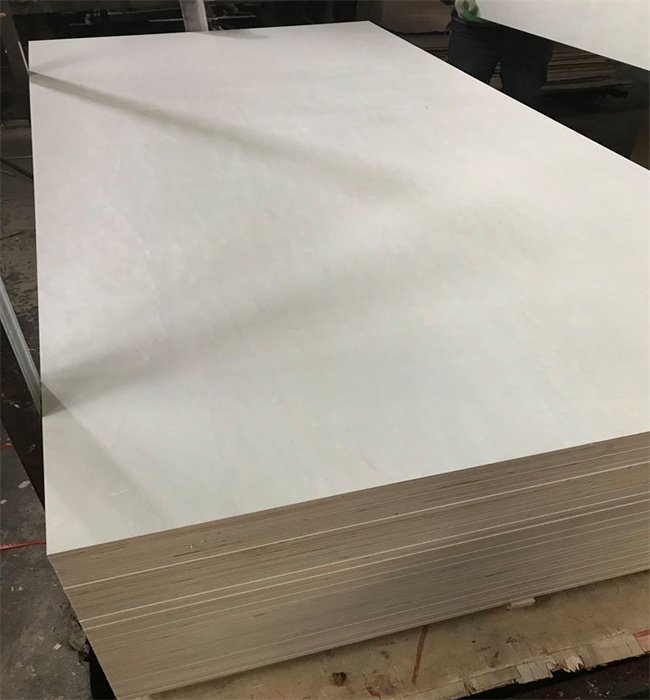
Importers and contractors often ask what a plywood price should look like before they request quotes, because the number they see moves with thickness, grade, glue class, and freight route. A plywood price is never a single sheet figure; it packages raw timber cost, factory conversion, finishing, and shipping into one line. This guide breaks down what actually drives the number, how price bands compare across grades, and the questions that separate a real quote from a rounded guess.
A plywood price is the delivered cost of a sheet once you add face grade, glue bond, trim, packing, and freight to the raw board. Understand the pieces and you can read any quote, spot the padded lines, and compare suppliers on the same basis instead of on imagination.
The veneer face sets the first price block. Tight A faces cost more because they waste yield in the mill; repair-heavy C and D faces cut the price. Core species follows, and the glue class adds another step: interior adhesive runs cheaper than a moisture-resistant bond, and waterproof classes cost more again. Buyers who only ask for thickness miss these three variables entirely.
First, the factory adds sanding, trimming to size, edge treatment, surface film, and packaging. Each operation consumes line time, and custom lengths or cut-to-size panels push the unit cost higher than buying stock sheets. The finishing block explains why two factories quote the same nominal panel at different numbers.
Finally, the delivered price depends on volume, port pair, container loading, and payment terms. FOB and CIF quotes for the same sheet can look very different, and neither is wrong when the freight differs. Compare quotes on the same Incoterm or you are comparing two different products. For international buyers, the packing block matters more than it looks: export packing adds strapping, moisture barriers, and container bracing, and the cost gap between a braced crate and a bare pallet tends to surface later as damage claims, not as a sheet figure.
Price bands follow the panel’s role more than its density. Premium structural and decorative panels sit above general-purpose sheets, and thickness scales the number on top of the grade. The table maps the realistic relationships buyers should expect before asking for a price.
| Panel | Relative price tier | Typical buyer use |
|---|---|---|
| Melamine Plywood | Mid | Cabinet-grade interiors and furniture |
| Commercial Plywood | Mid-low | Subfloor, packaging, general construction |
| Film Faced Plywood | Premium | Concrete formwork and repeated use |
| MDF Board | Mid-low | Machining-friendly panels and veneer bases |
| Chip Board | Budget | Supported fills and low-cost panels |
Definition: a price band is the relative range suppliers quote for a panel class before freight and terms. Thickness scales within every band: an 18 mm sheet costs more than a 9 mm panel of the same grade because it consumes more veneer and glue. It also weighs more, which lifts freight. Consequently, buyers comparing prices must hold grade, thickness, face, and glue constant; otherwise the comparison is meaningless.
Definition: mill price versus delivered price. The mill price is the sheet at the factory gate, and the delivered price adds inland transport, port charges, and ocean freight. Suppliers quoting on different bases can appear to differ by more than the product does. Price also moves with quantity: fixed setup, press cycles, and container space spread over more sheets, so a full container of one repeat size usually prices lower per sheet than a mixed small order.
Two mills can produce the same nominal sheet and quote different numbers because their cost structure differs in five places.
However, the biggest spread usually comes from specification, not factory efficiency. A quote for a premium film faced panel and a quote for a general building sheet occupy different bands, and comparing them misleads. Ask for the exact grade couplet, glue class, and face treatment before you judge the number. As a result, the lowest quote often belongs to the most different product, not the best deal.
| Job type | Where the plywood price should go |
|---|---|
| Hidden subfloor | Strong core and moisture-resistant glue; skip the premium face |
| Visible interior surface | Smooth sanded face or melamine face that needs no extra lamination |
| Repeated concrete pours | Film faced panel that survives stripping and cleaning |
| Dry, fully supported panels | Budget chip board when the sheet never spans unsupported |
Price differences show up in predictable places once panels arrive on site. Trim versus stock sheets is one: cut-to-size panels reduce on-site waste but add unit cost, while stock sheets cost less and create offcuts. Another is finish level, because a sanded face carries premium over a rough one even in the same thickness.
Price is not a property of the sheet alone; it depends on how the panel fits the job. A buyer who over-specifies a premium face for hidden subfloors pays for appearance no one sees, while a buyer who under-specifies the glue class for a humid region pays twice in delamination claims. Match the price to the exposed role and the moisture reality, then look for the factory that carries that exact grade in stock.
A realistic approach is to design around stock panels first and ask suppliers for the price on those sizes, then compare a trim option separately. For interior cabinet work, Melamine Plywood gives a finished face that avoids separate laminating labour. For structural floors, walls, and packaging, Commercial Plywood balances price and strength. Formwork teams pay a higher price for Film Faced Plywood because the film survives repeated pours, and machining shops save cost with MDF Board when dimensional stability beats panel strength.
Half the price difference disappears when your request gives the supplier enough detail to quote the same thing twice. A vague request like “plywood price per sheet” returns a defensive answer; a structured one returns numbers you can act on.
Next, check the three numbers that tell you if the quote is honest: the price per sheet, the price per square metre, and the total delivered cost. If the supplier only gives one, do the math yourself. Buyers who consolidate their requirement and compare on the same basis find that the market price band is tighter than the first two quotes suggested.
A realistic quote also carries a validity period, because veneer and freight move weekly. Locking the price and the lead time in writing protects both sides, and a supplier who refuses a validity window is usually quoting a market guess rather than a committed offer. Ask how long the number holds and what triggers a revision.
For a full picture of the available price levels across the range, from budget Chip Board to structural panels, our complete plywood product range carries the sizes and grades international buyers typically order.
These questions resolve the ambiguity that causes most price disputes after arrival.
Because the grade, face, glue, finishing, and freight differ even when the thickness matches. Ask each supplier to quote the same grade couplet, glue class, and Incoterm before comparing.
Sometimes, when the specification matches and the freight is real. Otherwise the cheap quote usually means a lower grade, interior glue, or a different trade term, and the difference shows up in performance later.
At quantity breaks and when you commit to stock sizes rather than custom cuts. Consolidating one order and loading containers with repeat sizes produces the most predictable saving.
A clear panel specification, unit price, quantity, Incoterm, port, payment terms, lead time, and validity period. In contrast, a one-line number with no specification is not a usable quote.
Finally, treat the first number as the start of a conversation, not the answer. Confirm the specification point by point, compare on the same trade terms, and document every feature the price covers. A plywood price makes sense when you know what is inside it, and the factory bears most of the risk when the quotation says exactly what you receive. We build every quote around that detail at HYY and ship the specification sheet alongside the panels.