Our Location
5th Floor, Huake Center, Lanshan District, Linyi City, Shandong Province, China

5th Floor, Huake Center, Lanshan District, Linyi City, Shandong Province, China
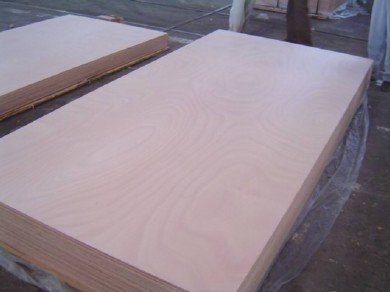
Construction plywood weight sets the truck load, the forklift routine, and the total freight bill, and it rarely matches what the sheet label suggests. Density moves with core species, glue, and face, so two 18 mm sheets can weigh differently by more than a third. This guide explains density, weight by thickness, pallet maths, and the weight checks that keep a quote honest.
Definition: density is the panel mass per cubic metre, and it moves with the core species, the glue loading, and the face treatment, so the weight of a construction sheet is a material property rather than a single number.
Three inputs set the scale of a sheet bundle. The core species supplies most of the mass, the glue and film add a set share, and the sanding line removes a little at the end, and the same nominal thickness produced on two lines lands at different weights because the species mix differs.
The weight class also changes the structural story. A denser core carries a stiffer sheet at the same thickness, so the engineer who chooses by weight chooses stiffness, and the freight team who chooses by weight chooses the price, and the two read the same number differently.
Weight appears on the delivery note twice. The nominal weight lines the truck plan, and the actual weight lines the crane and the rack, so the site that weighs the first sheet reconciles the order before the whole container spreads across the yard.
Poplar and softwood cores run light, around 480 to 550 kilograms per cubic metre, while eucalyptus, birch, and hardwood cores run heavier, from 600 to 750, and the species decision sets the weight class before the thickness is even chosen.
Species density also appears in the price. Hardwood cores cost more per sheet and ship heavier, while poplar and softwood cores ride cheaper and lighter, so the density line on the quote is often the hidden driver of the freight total.
Veneer count sits underneath the density as the second weight lever. A sheet built from thin plies packs more glue lines per millimetre, and every glue line adds a little mass, so two equal-thickness sheets can still weigh differently on the same stack.
The bonding and the overlay add a fixed share on top of the core. A phenolic film face adds grams per square metre to each side, and a denser glue spread adds a little more, so a filmed construction sheet weighs more than the bare counterpart at the same species and thickness.
Film weights are printed in grams per square metre, and phenolic overlays add a set mass on both faces, so a buyer who shifts a bare exterior sheet to a filmed one for a wet site should add that mass to the freight and the handling maths.
Buyers quote weight per sheet, per square metre, and per full pallet, and all three start from the same density figure. The table below translates medium-density construction panels to common sheet weights so a takeoff can check a quoted bundle against the drawing.
| Thickness | Approx weight per 1220 x 2440 mm sheet | Approx weight per m2 |
|---|---|---|
| 9 mm | 14 – 17 kg | 4.8 – 5.8 kg |
| 12 mm | 19 – 23 kg | 6.4 – 7.7 kg |
| 15 mm | 24 – 28 kg | 8.0 – 9.5 kg |
| 18 mm | 29 – 34 kg | 9.6 – 11.5 kg |
| 25 mm | 40 – 47 kg | 13.5 – 15.8 kg |
The range matters more than the single number on a quote. A heavy hardwood 18 mm sheet and a light poplar sheet of the same size differ by five kilograms and more, so a price quoted by the sheet hides the weight until the freight line re-opens it.
The sheet size changes the total as fast as the thickness. A 1220 by 2440 sheet and a 1200 by 2400 metric sheet carry different areas and different weights, so a quote that switches the size without re-pricing the weight line surprises the truck at the docks.
Imperial and metric densities confuse the same sum. A panel quoted in kilograms per square metre versus a sheet weight in pounds converts through the area, so the takeoff keeps one unit family per job and checks the conversion at the pallet.
Most exports ship by weight or by volume, and the heavier line usually wins the bill. A pallet of 18 mm construction sheets in a hardwood core loads differently from the same count in poplar, so the freight quote should carry the species and the density, not just the count of sheets.
The forklift and the rack read the same maths. A heavier pallet demands a bigger machine and a stronger floor bay, so a warehouse that planned for light panels re-checks its lift spec the day the hardwood bundle lands.
Container packing rides on the same maths in reverse. A light pallet packs more sheets to the bill of lading, while a dense hardwood pallet hits the weight limit long before the volume fills, so the shipment plans by the heavier of the two lines.
The rack and the floor bay follow the pallet. A 25-sheet pallet of dense 18 mm sheets crosses 900 kilograms with the pallet and the straps, so a mezzanine or a first-floor rack reads the floor rating before the fork lifts the bundle into place.
A single sheet weight check catches most order mistakes. Weigh one sheet on the dock scale, read the density from the plate, and compare the result with the quote, and an honest shipment matches within its tolerance while a substitution shows up in the first lift.
The structural and furniture lines confuse the same check. A 18 mm structural sheet and a 18 mm furniture core can differ in density by a quarter, so the site that only reads the thickness uses weight to confirm which line actually arrived.
The plate and the scale settle most arguments. A panel that reads 18 mm on the band saw but falls short of the quoted weight is usually a lighter species or a thinner veneer stack, so the scale is the fastest honesty test on the receiving line.
Moisture content shifts the scale with the weather too. A sheet that ships damp weighs more than the same sheet after a dry month indoors, so the weight rule of thumb carries a tolerance that changes with the season and the drying schedule.
Weight is a buying line, not just a freight number. Light cores ship cheaper and handle easier but take heavier fastener loads less kindly, while dense cores stiffen the panel and carry freight weight in exchange, so the order names the density target beside the thickness.
Most construction packages standardize on a balanced commercial sheet such as Commercial Plywood, which holds a predictable medium density for structural runs, and where a dense flat panel is wanted for shelving or furniture cores, MDF Board carries a heavier, uniform body. Check the weight lines at HYY before the container loads.
The weight target also sets the fastener habit. A dense panel keeps a screw and a nail with more grip, while a light panel needs the same fixing at a tighter spacing, so the spec that names the density names the fastening schedule too.
Mixed-line orders complicate the count. A furniture line and a structural line in the same container land at different weights, so the packing list that separates the bundles by density keeps the forklift routine and the rack plan simple.
These answers close the weight questions that arrive before a quote becomes an order.
Species, glue loading, and face treatment all shift density. Two panels of the same nominal thickness can differ by a quarter of their mass, so the weight belongs on the quote, not the thickness.
Roughly 29 to 34 kilograms per full 1220 by 2440 millimetre sheet for a medium-density core, with heavy hardwood versions running above that range.
Usually, but not always. Density helps stiffness and fastener grip within the same species family, yet a light species with a sound lay-up can outperform a dense one with open voids, so weight and rating are read together.
Weigh one sheet, multiply by the count, add the pallet and the packing film and straps, then compare the total with both the weight and the volume line on the quote.