Our Location
5th Floor, Huake Center, Lanshan District, Linyi City, Shandong Province, China

5th Floor, Huake Center, Lanshan District, Linyi City, Shandong Province, China
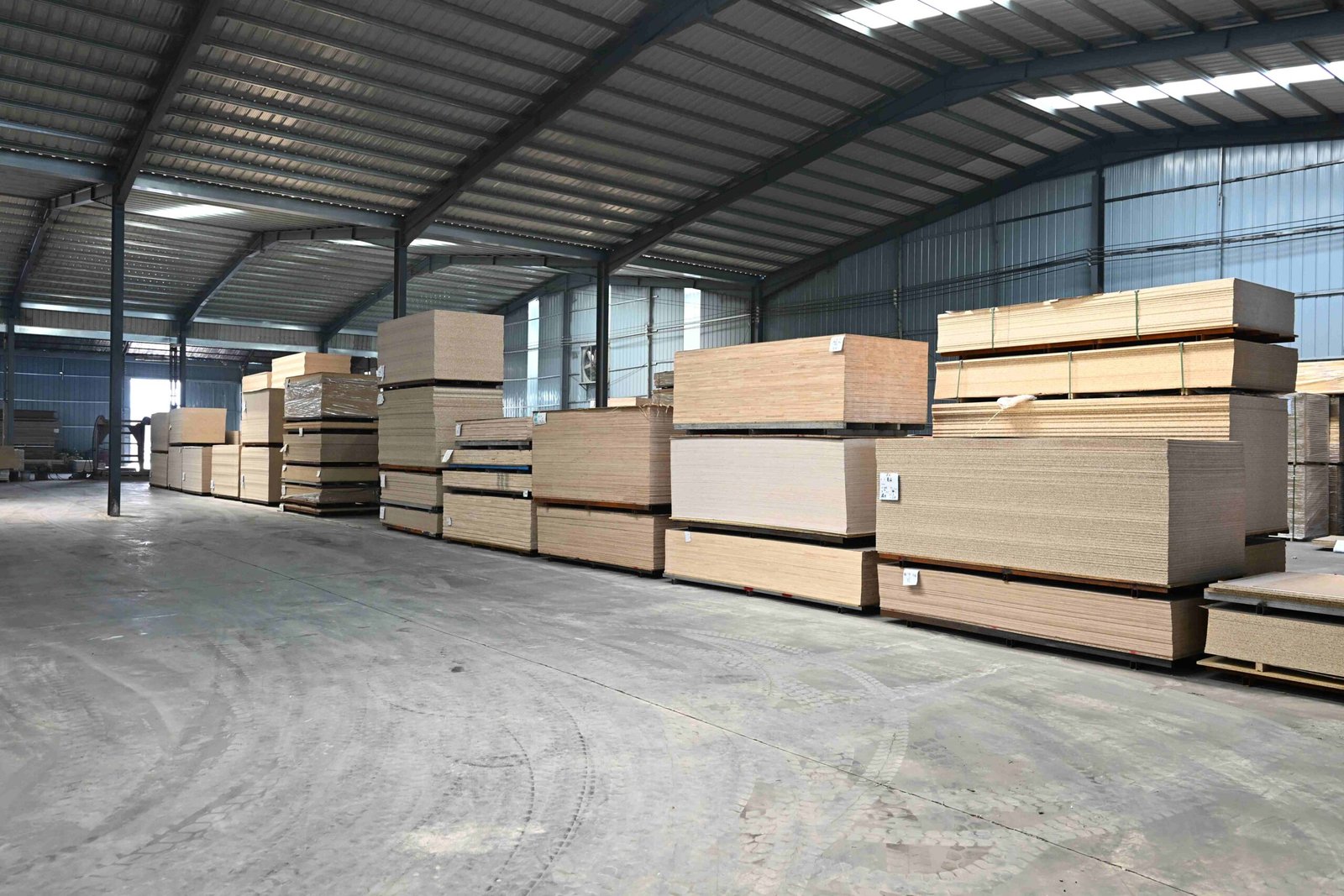
The plywood versus mdf question comes up on almost every panel order, because the two boards fill different corners of the same workshop. Plywood glues its strength from crossed veneer plies, while MDF presses fine fiber into a dense, uniform sheet. This guide compares the pair across strength, machining, finishing, and cost, then matches each panel to the jobs where it earns its place on the bench.
The two panels start from different stock. A mill peels a log into thin veneers for plywood, lays the grain of each ply at an angle to the next, and glues the stack under heat and pressure. An MDF line grinds wood into fiber, mixes the fiber with resin, and presses the mat into a flat board.
The grain direction drives the behavior. Plywood carries its strength along the face grain and resists bending across a span, while MDF spreads its properties evenly in every direction, so it cuts and machines the same way across the whole sheet.
Definition: plywood is an engineered panel of glued veneer plies with the grain of each layer crossed, while MDF is a panel of resin-bonded wood fiber pressed into a uniform, grain-free board.
The core shows at the edge. A plywood edge stacks visible veneers, and an MDF edge reads as fine even fiber, so a clear finish favors one panel and a painted face favors the other.
Density and weight follow the recipe. MDF packs a heavy, uniform core, and plywood trades a little density for the stiff crossed structure, so a framer and a cabinetmaker reach for different sheets from the same rack.
A quick bench test shows the difference. Cut a strip of each panel and flex it across a gap, and the plywood resists while the MDF bows, so a builder can feel the grain structure at work.
The build uses each panel for a reason. A framer wants the crossed strength for a moving structure, and a furniture maker wants the even face for a painted door, so the shop keeps both on the rack.
Load behavior separates the pair. Plywood bends along the grain and carries a shelf or a beam span, while MDF spreads a load evenly across its face yet flexes under a longer unsupported run.
| Property | Plywood | MDF |
|---|---|---|
| Structure | Crossed veneer plies | Pressed wood fiber |
| Load direction | Strong along grain | Even in all directions |
| Screw hold in face | Good | Strong |
| Screw hold at edge | Weak | Weak |
| Span stiffness | High | Moderate |
| Weight at equal thickness | Lighter | Heavier |
Screw hold rewards the right technique. MDF takes a screw in its flat face and holds a hinge or a bracket well, while plywood holds a fastener across its plies but splits at a screw driven into a bare edge.
Edge fastening wants a helper. A pilot hole, a glue line, and a blocking strip turn a weak edge into a firm joint on either panel, so the joint, not the board, decides the fix.
Definition: screw hold is the grip a panel keeps on a driven fastener, and it follows the panel structure, the fastener type, and the distance from the cut edge.
A span check guides the choice. A long shelf, a stair tread, a beam web, or a floor deck leans on plywood, while a flat cabinet door or a painted jig body suits the uniform MDF face.
Storage keeps both panels sound. Stack them flat on bearers in a dry shop, and the panels stay flat, while a damp floor or a leaning stack lets the humidity pull a curve into either board.
The coating choice follows the room. A humid space leans toward a sealed or coated face, and a dry, protected room takes a bare panel with a simple finish.
Water tells the two panels apart. Standard MDF swells and loses its shape at the first soak, while an exterior-bond plywood holds its glue line through wet weather and a wet job site.
Moisture-grade options exist on both sides. A moisture-resistant MDF with a green core handles a kitchen splash and a humid room, and an exterior or marine plywood takes the rain, so the exposure decides the grade line.
The cut edge needs the same care. A sealer or an edge band locks the fibers on either panel, and the sealed edge protects the core from the water that finds the cut first.
Finishing splits the work. MDF paints to a glass-smooth, grain-free face, and plywood carries a veneer or a film face that shows its grain or its color, so the finish goal picks the panel.
A melamine face covers both worlds. A melamine-coated board ships ready for furniture with a hard, clean surface, and the buyer can order Melamine Plywood where the sheet also needs plywood strength.
Waste joins the true cost. A panel with a clean, matched face cuts a large part from a small offcut, while a patched sheet forces a bigger piece, so the yield sits beside the rack price.
The finish step adds a line. A painted or coated face costs labor on top of the sheet, and that finishing labor often outweighs the raw panel difference.
Price bands shift with the market. Plywood tracks the veneer supply and the bond class, and MDF follows the fiber and resin cost, so the cheaper sheet changes with the season and the grade.
Tooling rewards MDF for fine work. MDF machines to a crisp edge with a sharp cutter and holds a detailed profile, while plywood can tear at the face on a dull bit and wants a backing board for a clean cut.
Weight loads the crew. A stack of heavy MDF slows a fitter and stresses a shelf bracket, and a lighter plywood sheet eases the carry, so the handling cost shows up in the labor line.
Dust control matters with MDF. The fine fiber dust coats a shop and clogs a filter, so extraction and a mask belong on the MDF job, where plywood throws a coarser chip.
A quote comparison should weigh the joinery. Two panels rarely swap one for one on cost, because the joint, the finish, and the lifespan each move with the board.
A prototype settles the doubt. Cut one part from each panel and test the joint and the finish, and the shop learns which board suits the line before a bulk order commits.
The supplier should confirm both grades. A desk that names the board, the bond, and the face on the quote saves the buyer a return when the pallet lands.
The job picks the panel. Structural work, wet rooms, and long spans lean on plywood, and painted furniture, detailed profiles, and flat doors suit MDF.
Match the panel to the task with these lines:
A mixed build often uses both. A cabinet can run a plywood back and shelf for strength and an MDF door for a smooth painted face, so one workshop keeps both panels on the rack.
The technical desk at HYY pairs the panel with the bond class and the face, so the order arrives matched to the job rather than to a habit. Buyers who need the densest smooth face order MDF Board in the right grade, and the structural lines ship as Commercial Plywood.
A sample review closes the choice. Cut a corner of each panel, check the edge and the face, and the job that needs a span or a smooth face answers itself.
The final choice rests on the job. A wet room, a long span, or a moving structure points to plywood, and a flat painted door or a detailed profile points to MDF.
The stock should match the plan. Order the grade and the thickness the drawing names, and keep a light sheet and a dense sheet on hand for the mixed build.
These answers cover the panel questions that buyers raise before they settle the order.
For a span, yes. Plywood carries a load along its grain and holds a long run, while MDF spreads a load evenly yet flexes sooner on an unsupported span.
In the face, yes. MDF grips a face screw well, while plywood holds across its plies and splits at the bare edge, so the joint and the pilot hole decide the result.
Exterior-bond plywood wins a wet job. Standard MDF swells at the first soak, and only a moisture-resistant or waterproof MDF grade suits a humid room.
Both finish well with the right method. MDF paints to a smooth face, and plywood takes a veneer, a film, or a stain that shows its grain and its color.