Our Location
5th Floor, Huake Center, Lanshan District, Linyi City, Shandong Province, China

5th Floor, Huake Center, Lanshan District, Linyi City, Shandong Province, China
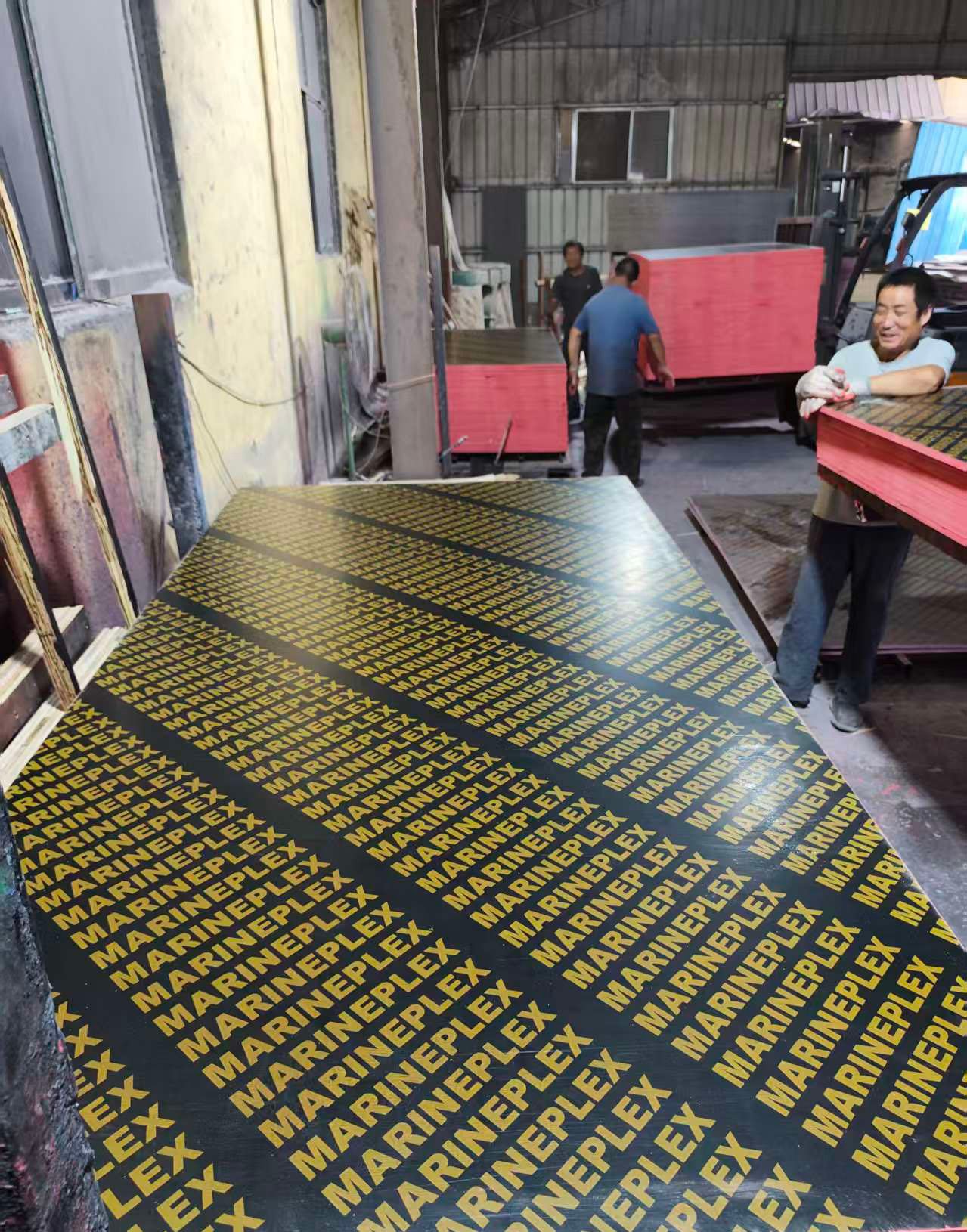
Contractors ask about film faced plywood vs marine plywood when a formwork job meets a wet pour or a waterfront structure. The two panels look alike at first glance, but they solve different problems: one repeats concrete pours, and the other carries moisture and load in marine service. This guide compares their face films, glue classes, load ratings, and price, and ends with the decision rules that settle most orders.
Film faced plywood starts as a strong structural core with a plastic or paper overlay pressed onto both faces. The film seals the surface, and the panel’s job is to release concrete cleanly and survive repeated formwork cycles. Consequently, the specification centers on film weight and core density rather than on face veneer quality.
Definition: marine plywood is a panel built with waterproof adhesive between every ply, sorted faces, and a declared load rating, designed to keep its strength through prolonged moisture and mechanical load in boat and marine structure. The two products share a glue heritage but diverge on the face, the rating, and the price.
Edge wear shows the same contrast quickly. A film panel cuts clean at the saw and stays tight after sealing, while a bare marine face chips and opens at the cut, and every open edge shortens the wet life of the sheet on the job.
When the surface seals matter more than the veneer, the film panel wins. Concrete crews care about stripping, oiling, and edge damage, so a heavy film outperforms a bare face over the same number of pours. In contrast, visible grain, fair faces, and smooth finish decide whether a marine structure looks right after the job ends.
Testing exposes the bond quickly. A boiling test on a sample edge shows whether the glue line survives the harshest wet state, and buyers use that cheap check on a cut sample before a large order instead of trusting a label alone.
The glue class runs parallel to the film. Film faced panels carry exterior glue, while true marine panels move up to WBP or a named national standard, which matters when the panel boards below the waterline or stays saturated for weeks.
Definition: WBP glue means waterproof and boil-proof adhesive, and it names the harshest wet test a plywood bond passes. The mark appears on exterior and marine panels and gives the buyer a single word to compare glue quality across suppliers without reading a long adhesive datasheet.
Moisture behaviour also follows the core. A dense core resists swelling at the cut edge, while a low-density core drinks water at the saw line and lifts the film, so the formwork spec names a core density alongside the film weight on the order.
Standard sizes also line up across the two families. Both come in 1220 by 2440 millimeter sheets and common thicknesses from 6 to 25 millimeters, so the same formwork frames and jigs serve either panel without changing layout.
Inspection and grade lines finish the comparison. Marine panels grade every face against a strict standard, while film panels grade the core against formwork duty, and that difference shows up in the number of rejects a buyer tolerates per load.
Both families start with hardwood or softwood or poplar cores, but the species changes weight and stiffness. Poplar cores cut light and price low, eucalyptus and hardwood cores stiffen the beam, and the load class follows the core and the lay-up rather than the colour of the face.
Read the rating on the stamp before the price. EN 314 class 3 glue and an exterior bond cover most formwork, while a marine panel adds a declared strength class that supports a specific span across the hull or the pier. Buyers who need an all round interior structural sheet keep a Commercial Plywood in the same order for the dry parts of the project.
Definition: cost per cast is the panel price divided by the number of clean pours it survives, and it outranks the sheet price whenever a crew reuses panels on a tall project.
Site habits change the same panel’s reuse count more than the brand does. Crews who oil before the pour, strip with the nose edge, and patch small dents each afternoon regularly add two or three cycles, while crews who leave panels standing against the crate lose those cycles to edge soak and wreath warp.
Reuse counts decide the real cost of Film Faced Plywood. A medium film sheet with sealed edges handles four to eight pours, and a heavy film reaches ten or more, so a contractor who plans cycles stops comparing sheet prices and starts comparing cost per cast.
| Panel choice | Typical clean pours | Best use | Edge care |
|---|---|---|---|
| Light film | 1-3 | Small slabs and one-off columns | Seal and use once |
| Medium film | 4-8 | Standard wall and beam formwork | Oil and rotate |
| Heavy film | 10+ | Precast tables and fly forms | Repair and re-oil |
Marine panels appear on formwork sites for a different reason. Some buyers spec them for the thick faces and the moisture tolerance, but the price per cycle rarely beats a heavy film panel, so the marine spec appears mostly where the formwork doubles as long-term wet structure.
Marine work tests the bond compound, not just the surface. Screws pull against the lay-up under load, and a glue line that softens in moisture throws the whole panel assembly, which is why the marine stamp certifies the bond and the shear together instead of promising a pretty face.
Joint sealing decides the wet structure either way. Panels joined edge to edge let water through the gap, so marine work specifies glued and sealed joints against the same boards that hold the load under wet service.
Below the waterline, the panel carries load with the glue line intact. Film faced panels release concrete well, but they do not promise a certified structural bond across the face, so builders and repair yards specify a marine panel for hull patches, dock decking, and saturation zones. As a result, the spec sheet names the exposure before it names the face.
Finishing again splits the two. A film face rejects paint without etching, while a bare marine face accepts the coating system that protects the timber in the open. In contrast, the film panel’s face suits formwork oil and nothing else, so crews who want one panel for both worlds usually order both products for their separate jobs.
Lead time answers the next question. Film faced panels press in large export runs, so a container order keeps a short production window, while marine panels move in smaller certified batches and take longer unless the mill keeps them in stock.
Film faced panels price lower for the same thickness because the core tolerates more fill and the overlay hides the face. Furthermore, manufacturers press them in export volume, so lead times stay short and container freight holds steady for formwork buyers.
Specify the panel with the future pour in mind. Contractors who standardize one spec across the project keep the oil, the edge sealer, and the reuse log, and the saving shows on the second job. For the full range of panels, teams review the factory listing from HYY.
Buyers bring one more number to this debate: the expected cycles. With the cycle count, the exposure, and the load in hand, a supplier names one panel, and the quote stops wandering between two families.
Networks ask this comparison a third way: which panel holds up in a flood-damaged repair. The answer usually names the marine panel for the soaked structural parts and a film panel for the formwork, so both products ship on the same repair job.
These questions settle the same debate at the quotation desk, and the answers keep the spec honest when the supplier asks for one panel name.
Only for temporary staging, not for wet structure. A film face adds no certified marine bond, and saturation breaks the overlay at the edges long before the hull carries load.
Not necessarily. The marine face lacks the release layer, so stripping pulls the veneer. A medium film panel with sealed edges survives more clean formwork cycles at a lower price.
Film faced plywood prices lower for the same thickness and size, which is why formwork budgets standardize on it and reserve marine panels for the wet structural parts.
Yes. Both products absorb moisture fastest at cut edges. Factory-sealed or site-sealed edges extend the life of the film panel and stop delamination in marine service.