Our Location
5th Floor, Huake Center, Lanshan District, Linyi City, Shandong Province, China

5th Floor, Huake Center, Lanshan District, Linyi City, Shandong Province, China
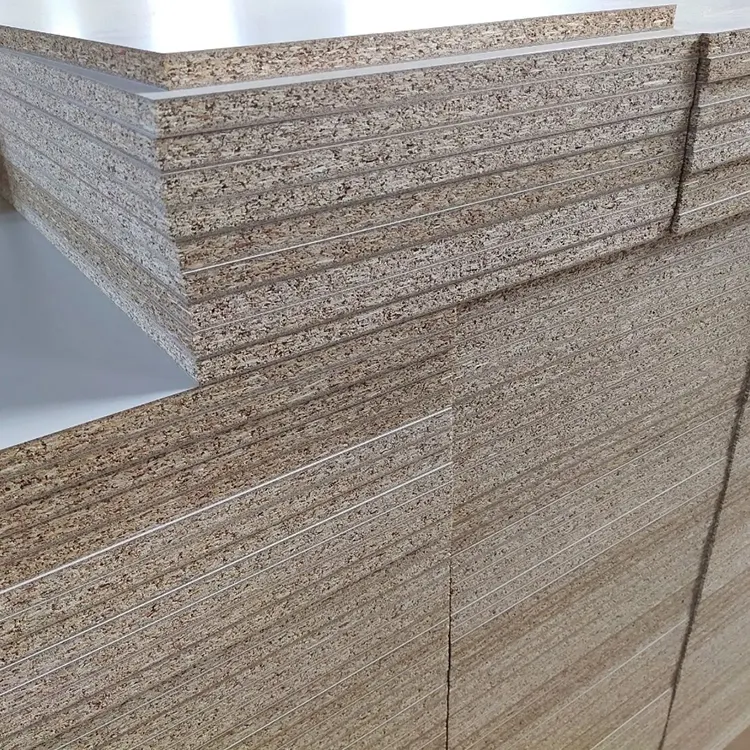
The plywood vs chipboard decision comes up in interior furniture, shop fitting, and packing, where buyers want the cheapest flat panel that passes the job. Chipboard, also called particle board, compresses sawmill chips with resin, while plywood layers veneer for strength. This guide compares the two on strength, moisture, machining, and installed cost so the panel choice fits the part.
By the end, you can score any interior panel job and pick the board that survives the load without outspending the budget.
The name chipboard covers a range of densities, so two panels under the same label can behave very differently. Checking the density and the moisture class attached to the panel closes that gap before the price comparison starts.
Definition: chipboard or particle board is a panel made from wood chips and sawdust bonded with resin under heat and pressure, then sanded flat on both faces.
Definition: bending stiffness is the panel’s resistance to sag between supports, and it drives the thickness a shelf or a bench top needs. Plywood reaches the stiffness with less material, which is why the same span asks more from chipboard.
Joinery strength follows the same line. Corner screws and dowels bite into continuous veneer on plywood, while chipboard crushes around over-tightened fittings, so cabinets that move and reassemble last longer on plywood.
Plywood keeps cross-laminated veneer strength in every direction, while chipboard compresses chips with no continuous grain, so it carries compression well and bending poorly. Consequently, a chipboard shelf sags under load that a plywood shelf carries easily at the same thickness.
Weight surprises new buyers: chipboard feels heavy because it packs chips densely, and that density raises freight cost per square metre. A budget sheet price can still lose on transport when the container weighs out before it fills.
Chipboard usually prices lower per sheet because it consumes cheap mill residues. In contrast, plywood spends on veneer sorting and lay-up, which is why the comparison starts with a cost advantage for chipboard that narrows as the job gets harder.
Shelf span is the honest test. A 600 mm shelf on chipboard needs close supports or a thicker panel, while the same run on plywood sags less and keeps its edge under book loads, so the design must name the span before either board works.
Fastener grips also differ in the long run. Chipboard holds a screw initially, then strips after a few load cycles, while plywood keeps a thread grip through the veneer, which matters for legs, hinges, and hardware that open and close all day.
Deflection beats raw thickness in most interior designs. A shallow carcass that spans 600 millimetres gains more from a stiff panel than from a thicker soft one, which is why engineered furniture drawings list a material stiffness before the panel name.
Bending and fastening decide the everyday panel order. Plywood spans shelves, bench tops, and structural faces, while chipboard spans short distances and needs support every 400 to 600 millimetres.
| Property | Plywood | Chipboard |
|---|---|---|
| Bending strength | High | Low, sags on long spans |
| Screw pull-out | Strong | Teeth grip, strips under cycling |
| Edge quality | Veneer edge, can void | Dense flat edge for edging |
| Moisture resistance | Moisture grades exist | Melamine-faced only for dry |
| Weight | Medium | Dense and heavy per unit |
As a result, long spans and repeated loads stay on plywood, and short enclosed panels can run chipboard without complaint.
Shops and warehouses alike learn the moisture lesson late. A spill left overnight sucks into a chipboard edge and bulges the surface, while the same board in plywood swells less and dries flat, so any part that faces liquids should upgrade the material rather than the coating.
Moisture separates the panels quickly. Chipboard swells, softens, and lifts its edges in damp air, while plywood with exterior or melamine glue holds up in humid kitchens and laundries.
Furthermore, cut edges tell the same story, because every chop opens the chip core to moisture, so wet zones need edge banding on chipboard or an exterior-grade plywood face.
Uniform density gives chipboard its machining advantage around dadoes and dowel holes, where the core cuts predictably every run. Plywood voids at the face interrupt the same detail, which is why production shops reserve the dense board for repeat-cut panels.
Warp and twist tell the final story. A dense chipboard sheet lays flat across a cabinet carcass, while a stressed plywood veneer can cup in one direction, so large flat tops often prefer the stable chip core when moisture stays low.
Edges gate the finishing quality on both panels. A chipboard edge swells when damp and flakes where paint climbs, while a plywood edge accepts sealer and sandpaper, so visible cabinetry regularly specifies banded chipboard or a veneered plywood edge.
Chipboard machines well on covered CNC runs because its dense core holds profiles cleanly, and it stays flat across large areas. Plywood machines cleanly too, but it shows grain and occasional edge voids that need filling before paint.
First, ask whether the face shows a painted or veneered finish, then choose the board that reduces finishing labour. Next, count the machined detail: routed grooves and dados favour the dense chip core, while deep sagging shelves favour plywood.
Chip Board covers the budget fill roles, and MDF Board adds a denser machining core where the budget allows.
Standard furniture parts give the fastest answer. Drawer sides, internal divisions, and hidden fills run chipboard cheaply, while the visible faces, the loaded shelves, and the moving joints run plywood or a faced panel, and the two families mix in one order without complaint.
A fitment drawing settles the material fast. The parts that carry, hinge, or face moisture name plywood, and the flat fills behind them name chipboard, and mixing the two in one order keeps both the strength and the budget line.
Use the part, not the showroom, to decide.
| Part | Better panel | Reason |
|---|---|---|
| Long shelves and worktops | Plywood | Carries span without sag |
| Panel doors and flat fronts | MDF-finished | Clean routing and paint base |
| Hidden internal divisions | Chipboard | Lowest cost, dry service |
| Humid kitchens | Plywood or faced | Resists swelling |
| Shipping crates indoors | Chipboard | Cheap and flat |
For finished interiors with structural cores, Melamine Plywood pairs a wipeable face with veneer strength, and Commercial Plywood carries load-bearing parts that chipboard cannot take.
Most interior specifiers end up writing a mixed order: chipboard for the opaque internal panels and plywood or faced board for the parts that carry, move, or show.
Showrooms complicate the comparison by selling finished panels, so a buyer should drop the laminate and quote the raw board underneath. That price is where chipboard wins and plywood earns its premium on the parts that move.
These questions settle most interior panel debates.
No. Standard chipboard swells and loses strength in damp air. Moisture-resistant variants and melamine faces help for kitchens, but true wet service belongs on plywood or water-rated boards. Edges absorb fastest, so every exposed chipboard cut in a kitchen should carry factory banding or a sealed edge.
Plywood pays for veneer sorting and cross-laminated lay-up, while chipboard compresses cheap mill residues. The price gap buys bending strength, fastener grip, and moisture tolerance.
Only on short spans with close support. Plywood carries the same load with less sag and sturdier corner joints, so heavy shelving should specify plywood. Corner joints repeat the lesson: a dowel in chipboard gives way sooner than the same joint in plywood under daily opening cycles.
Painted chipboard needs a sealed edge and primer to hide its textured face, while plywood grain shows through paint unless filled. Decorative painted surfaces usually start on MDF or a faced panel. Sanded silky faces also hold the paint film where the panel meets trim, and the extra fill cost disappears from the finishing budget.
Finally, match the panel to the span, the moisture, and the visible finish in that order. Chipboard fills the low-cost dry roles, and plywood carries the parts that must not fail. We supply both families with the face, edge, and moisture class documented, so the selection stays honest at HYY from the first quote to the delivered panel.