Our Location
5th Floor, Huake Center, Lanshan District, Linyi City, Shandong Province, China

5th Floor, Huake Center, Lanshan District, Linyi City, Shandong Province, China
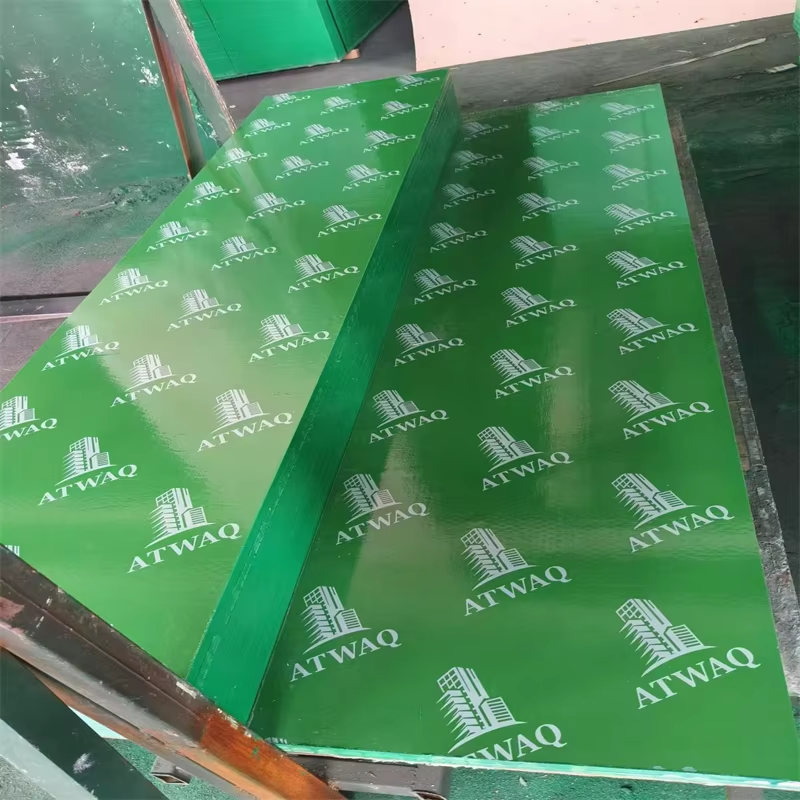
Contractors who want to buy film faced plywood for concrete formwork usually ask the same thing: which film, core, and thickness will survive the most pours at the right price. The film protects the face, and the core takes the mould pressure, so both lines matter. This guide explains the construction, the film types, and the ordering checklist that matches the panel to the job.
By the end, you can write a film faced specification that names the film type, the core, and the expected reuse count in one line.
Definition: film faced plywood is a structural panel with a resin-impregnated paper sheet bonded to each face, which seals the timber from moisture and releases cleanly from concrete.
Definition: co-bonded film means the overlay cures onto the core in the same press cycle as the glue, so film and veneer behave as one surface. Films that arrive after pressing show up later as peeling at the edges and call for different handling.
The core species decides weight and stiffness. Poplar cores cut lighter and cost less, eucalyptus and bamboo cores stiffen the panel, and hardwood cores carry heavy formwork best, so the spec names the core the same way it names the film.
Balance matters in the lay-up. Symmetric plies keep a film faced panel flat when the sun and the damp pull on one face, while an off-centre core cups slowly on site and prints a bow into the concrete line.
The core uses cross-laminated hardwood or poplar veneers pressed with phenolic glue, and the film cures onto both faces during the same press cycle. Consequently, the film and the core share one bond, and delamination usually starts at damaged edges rather than on the faces.
Colour signals the class on site, but the number tells the truth. A heavy film withstands stripping hooks and re-oiling, while light films suit smooth one-use jobs, and crews who print the gram weight on the panel label avoid mixing the two in the roster.
Heavier films, measured in grams per square metre, mark longer formwork life. In contrast, lighter films suit one-off smaller pours where the buyer prefers lower cost.
The cure quality matters as much as the grams. A well-cured medium film outperforms a slap-cured heavy film, so buyers check the maker’s press history and ask for the film release certificate before the price conversation.
Suppliers divide film faced boards by film weight, core species, and face colour, and each combination suits a different market.
| Type | Film weight | Typical core | Best use |
|---|---|---|---|
| Light brown | 120-180 gsm | Poplar or mixed | Small pours, one use |
| Medium brown | 180-220 gsm | Poplar or eucalyptus | General formwork |
| Heavy black | 220-360 gsm | Hardwood or film sheet | High reuse pours |
| Red film | Medium to heavy | Hardwood core | Structural and export |
Furthermore, the colour helps buyers tell the film class apart on site, so a heavy black panel does not get mixed with a light one-use board in the roster.
Formwork geometry drives the panel choice. Tall walls and columns value clean releases and long edges, precast tables value many cycles, and small residential pours value a low sheet price, so one film spec cannot cover every roster.
Contractors pick by cycle cost, and the arithmetic splits the roster into three standard groups:
Beyond the cycles, the tolerance and the edge detail decide whether the concrete face needs a second float pass, so the film group pairs with the finishing spec.
Film faced boards leave concrete with a clean release and stand up to stripping, cleaning, and re-oiling, which is why they dominate modern formwork.
As a result, the panel earns its price in reuse count: a heavy film that scores fifteen pours beats a light sheet at one or two cycles, and the arithmetic decides the spec.
The specification also names the panel tolerance. Formwork relies on thickness consistency across the face, because a proud millimetre prints into the concrete line, so the tolerance band belongs in the purchase order.
Packing and transport complete the story. Moisture-dominated sea routes deserve a moisture barrier and strapping, and panels stored flat under cover keep their film and their square edge until the crew calls them up.
Delivery moisture also belongs in the contract. Panels inside the box arrive fit for the morning pour, while panels read at high moisture sit and wait, so the buyer names a moisture band and a flat-storage rule on the packing list.
Write the order with the film, core, thickness, and size on separate lines so the mill quotes one panel, not a family.
Furthermore, order edge sealing on wet-site jobs, and confirm the moisture content target so the mould frame keeps its tolerance between shipped and site conditions.
Contractors also price the consumables around the panel: release agent, edge sealer, and replacement film add to the cost per cast, so the total formwork cost compares panels only after those lines appear.
Every reuse decision counts the stripping style. A crew that oils before the pour and strips with the nose edge earns two or three extra cycles from the same panel, and those cycles rewrite the cost per square metre on the next quote.
Price per sheet means less than price per usable pour. Compare the heavy film panel and the light panel across the planned cycle count, then add handling and cleaning labour.
| Scenario | Suggested film | Why |
|---|---|---|
| One-off house pours | Light brown | Lowest material cost |
| Site slabs and beams | Medium brown | Balanced reuse |
| High-rise wall cycles | Heavy black | Fifteen pours expected |
| Aggressive concrete mixes | Heavy with sealed edges | Chemical wear |
Most formwork teams standardise on Film Faced Plywood for the faces, Commercial Plywood for the non-contact backing, and Melamine Plywood for interior timber-look finishes on the same site.
Bring three numbers to the quote: the planned cycles, the thickness tolerance, and the panel size the layout needs. With those three lines, suppliers quote one panel instead of a family of choices.
Teams that keep a written per-pour log extend film life: they oil evenly, strip gently, and rotate panels across faces, and the reuse count climbs without changing the specification.
These questions come from formwork teams at the tender stage.
From a handful for light films to fifteen or more for heavy films with sealed edges, depending on the release agent, the mix, and the stripping care. Confirm the stated count on the delivery sheet. The same film lasts longer on sealed edges and shorter on aggressive mixes, so the count is a planning number, not a warranty.
Match it to the planned cycles. One-use jobs take light film, repeated pours take 220 gsm and above, and aggressive mixes push the spec toward heavy black with edge sealing. Exposed aggregate and high-alkali mixes wear light films quickly, so the chemical character of the pour belongs in the conversation before the price is set.
Yes, on wet sites and long formwork. Cut edges expose the core, and edge sealer or factory-applied sealing extends reuse and keeps the form tight.
It tolerates construction wetness and cleaning well, but for permanent outdoor structure, an exterior-rated structural panel with the right bond remains the safer choice. For permanent exposure, a marine or treated structural core carries the load after the formwork season ends.
Finally, buy by planned pours and sealed edges rather than by the first price sheet. The film weight, the core, and the edge treatment decide the cost per cast, and a documented specification removes the guesswork from the tender. We ship film faced panels with the film weight and reuse class marked on every sheet at HYY, so the formwork saves on site labour and reorder cost.