Our Location
5th Floor, Huake Center, Lanshan District, Linyi City, Shandong Province, China

5th Floor, Huake Center, Lanshan District, Linyi City, Shandong Province, China
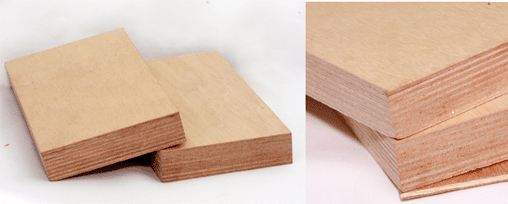
Plywood prices 4×8 chase a moving target, because a full 1220 by 2440 mm sheet carries a different number for every grade, thickness, and face. A buyer who reads only the headline rate misses the core, the glue, and the freight that swing the delivered cost. This guide breaks down the plywood prices 4×8 range, the grade bands, the thickness and face premiums, and the way freight and quantity change the quote you actually pay.
The sheet size sets the base. A full 4 by 8 foot panel covers a standard floor or wall module, so most mills price the common size first and scale the odd sizes from it.
Raw material rules the line. The veneer supply, the log quality, and the glue resin move the cost before the mill adds labor, so a tight veneer market lifts every grade on the list.
Definition: plywood prices 4×8 is the quoted cost of one full-size 1220 by 2440 mm panel, expressed per sheet, and it bundles the grade, the thickness, the core, the face, and the glue into a single rate.
Grade climbs the price ladder. A utility sheathing panel sits at the low end, a sanded cabinet grade sits higher, and a marine or film-faced sheet tops the band, so grade is the first lever on the quote.
The order changes the rate. A single sheet at a retail counter costs more per unit than a pallet at a trade price, so the quantity line sits beside the sheet price on every serious quote.
The buyer should fix the use first. A hidden wall panel and a visible shelf carry different budgets, and naming the job before the grade avoids an over-priced order.
A sample of each band helps. Holding a utility sheet beside a cabinet sheet shows the face and the weight, so the buyer sees what the grade premium buys.
Each grade serves a job and a budget. The buyer who matches the grade to the task avoids paying a cabinet-grade premium for a hidden wall panel or a sheathing rate for a visible shelf.
| Grade | Typical use | Price band |
|---|---|---|
| Utility sheathing | Hidden structural work | Lowest |
| Sanded construction | General building | Low to mid |
| Cabinet grade | Visible furniture | Mid to high |
| Film faced | Concrete formwork | High |
| Marine | Wet and boat work | Highest |
The face grade adds to the rate. A clear, matched face raises the price on a sanded or cabinet sheet, while a patched face keeps the cost down where the buyer plans to cover or paint the panel.
The core grade carries its own premium. A hardwood core holds screws and stiffness better than a softwood or poplar core, so a core upgrade lifts the price and the performance together.
Glue class moves the number. An exterior or marine bond costs more resin than an interior bond, so a wet-duty sheet prices above the same panel built for dry service.
A grade check protects the budget. The buyer who confirms the grade on the stamp avoids a cheap sheet sold as a premium one, and the quote should name the grade outright.
A thickness gauge settles the spec. The buyer reads the panel against the quoted size, and a light sheet that misses the tolerance returns to the mill before the build starts.
The core word covers a range. A hardwood, softwood, or mixed core each carries a price and a strength, so the quote should name the core rather than the family.
Thickness scales the price. A thicker sheet carries more veneer and more glue, so an 18 mm panel prices above a 12 mm sheet of the same grade, and the gap widens as the thickness climbs.
The core choice shifts the number. A dense hardwood core lifts both the price and the screw hold, and a light softwood core trims the cost for a job that carries little load.
The face treatment finishes the sum. A melamine face, a film face, or a veneer face each adds a step and a cost, so the finished face carries its own line above the bare sanded sheet.
Definition: the face premium is the extra cost a mill adds for a film, melamine, or veneer surface over the bare sanded panel, and it follows the coating material and the pressing step.
A tolerance note protects the buyer. The thickness spec should carry a tolerance, because a nominal 18 mm sheet can run light, and a light sheet carries less than the price implies.
Weight feeds the handling line. A heavy thick sheet raises the freight and the labor, so the total cost of a heavy grade sits above its sheet price once the crew lifts it.
The drop point changes the quote. A site delivery costs more than a yard pickup, and a narrow lane or a tight gate adds a handling charge to the freight line.
A standard pack protects the edges. A wrapped, edged pallet reaches the site clean, while a loose stack chips the corners and wastes the top sheets.
Freight changes the delivered price. A distant mill adds distance and a heavier sheet adds weight, so the freight line can match the sheet price on a long haul.
Quantity opens a better rate. A full pallet or a container load drops the unit price, and a mixed order lets the buyer spread the freight across more sheets, so volume rewards planning.
Lead time moves with the order. A stock grade ships from the yard in days, and a special face or a marine sheet needs a press run, so the schedule adds its own cost to the project.
Use these lines when you build the order:
A landed-cost view wins the decision. The sheet price alone hides the freight and the waste, and the buyer who compares the delivered cost per square meter picks the better deal.
The comparison sheet keeps the bids level. Listing grade, thickness, core, face, and freight for each supplier turns a jumble of numbers into a clear choice.
A lead time is a cost line. A cheap sheet that arrives late can stall a crew, and the schedule often weighs more than a small price gap between two mills.
A clear quote names every variable. The grade, the thickness, the core, the face, the glue, the quantity, and the freight should each appear, so the buyer compares like with like.
The specifications anchor the rate. A sheet stamped with a named grade and a thickness tolerance gives the buyer a basis to compare, and a vague line hides the savings a substitute could bring.
The product line changes the rate too. A coated furniture panel carries a higher band than a bare sheet, and buyers who finish the face often price Melamine Plywood against a raw panel plus the coating cost.
A sample bundle settles the spec. Order a small pack of the quoted grade, check the face and the core, and the full order follows a panel the buyer has already seen and measured.
The technical desk at HYY quotes the grade, the thickness, and the freight on one line, so the 4×8 sheet price arrives as a delivered number. Structural buyers compare Commercial Plywood bands, and furniture shops weigh the coated rates beside them.
The budget follows the build. A buyer who prices the grade, the faces, and the freight together sees the true cost, and the cheapest rack price rarely wins the job.
A repeat order rewards the plan. A mill that holds the grade and the size steady lets the shop re-order without a re-spec, so the second batch matches the first.
These answers cover the pricing questions that buyers raise when they compare 4×8 sheet quotes.
Grade, thickness, core, face, and freight each move the rate. Two shops can quote the same size at very different prices when the grade or the glue class differs.
Usually, yes, within one grade. A thicker panel carries more veneer and glue, yet a cheaper core or face can price a thick sheet below a premium thin one.
Raise the quantity and match the grade to the job. A pallet rate and a utility grade where the panel hides cut the unit cost without hurting the build.
The common size often prices best. Mills run the 1220 by 2440 mm panel in volume, so an odd size can carry a premium for the extra cutting and setup.