Our Location
5th Floor, Huake Center, Lanshan District, Linyi City, Shandong Province, China

5th Floor, Huake Center, Lanshan District, Linyi City, Shandong Province, China
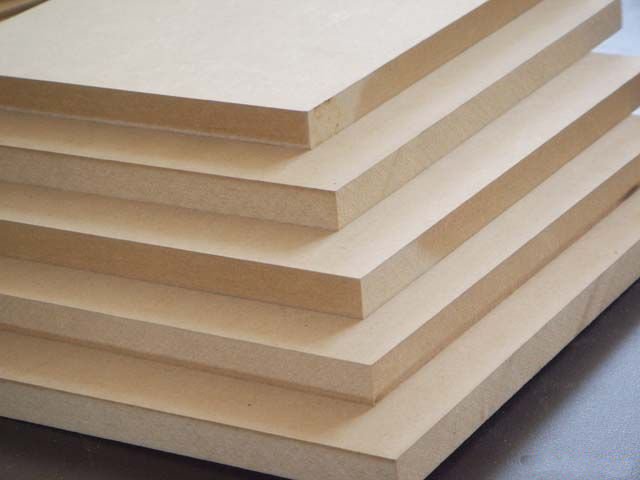
The plywood vs mdf question appears before nearly every panel order, because both boards look similar in a showroom and behave differently on site. Strength, moisture, machining, and price move in opposite directions between the two. This guide compares them on the criteria buyers actually use, explains when each panel earns its place, and closes with the fastest way to shortlist for a specific project.
By the end you can score any panel job: wet or dry, loaded or covered, painted or edged, and the answer points to one board without guesswork.
Plywood builds from cross-laminated veneers, while MDF compresses wood fibres and resin into a uniform core. Consequently, the two respond to force, moisture, and fasteners in opposite ways, and most buying mistakes come from choosing one where the other fits.
Definition: cross-lamination means each veneer layer sits at right angles to the layer below it. This spreads load in both directions, so plywood carries bending force without splitting along a single grain line, and it resists racking in framed walls. The veneer structure also gives plywood a springy feel under foot traffic, which is why floors and subfloors stay on plywood even when cheaper sheets exist.
Plywood also bends around tighter radii than MDF, because the veneer layers slide past one another under pressure. Boat builders and furniture curves rely on that flexibility, while MDF cracks when it bends beyond its limit.
In contrast, MDF machines cleanly in every direction because it has no grain. Profiles, grooves, and routed details stay crisp, which is why cabinet shops use it for finished doors and panel fronts where the edge will show. The uniform body also takes paint evenly, so one primer coat flattens most of the surface story that sanded veneers reveal.
The real difference is a trade: plywood trades smooth finish for strength, and MDF trades strength for perfectly consistent machining.
Definition: moisture-resistant MDF carries a hydrophobic resin and a green core dye, and it survives damp rooms far better than standard MDF, though its edge still swells faster than plywood in standing water. Most humid interior projects can use it successfully, but structural and exterior roles still belong to plywood.
Wetness decides this comparison faster than anything else. Plywood with exterior or melamine glue resists moisture well, while standard MDF swells at edges and lifts its finish. Bathrooms, laundries, and humid export containers therefore favour plywood or moisture-grade MDF over the basic product.
| Behaviour | Plywood | MDF |
|---|---|---|
| Edge swell in damp air | Low | High for standard grades |
| Strength after wetting | Holds with exterior glue | Drops sharply |
| Moisture-resistant classes | Common | Available but priced |
| Paint and finish adhesion | Good after priming | Excellent, flat surface |
Score the room humidity before you compare prices, using this checklist.
As a result, define the humidity level of the project first, because a dry furniture shop and a coastal packing shed need different boards even when the panel size is identical.
Impact also separates the two: plywood dents and recovers on tough veneers, while MDF shows a permanent compression mark at the point of any knock. Retail counters, workbenches, and stacking boards should therefore stay on plywood faces where impact is expected day to day.
Plywood wins on bending strength and fastener pull-out because intact veneer carries the load around each screw. MDF wins on compression, so it takes a smooth edge and resists crushing under vertical loads better than an open core.
Definition: racking resistance is the panel’s ability to keep a frame square under sideways force. Building walls and shear panels rely on it, which is why structural work stays on plywood even where MDF costs less per sheet.
Weight follows the same pattern: a metro panel of the same size weighs roughly the same or a little more than plywood, yet each kilogram arrives with less structural value. However, the smooth edges that MDF keeps make it lighter to finish, so the total installed weight story depends on what happens after the sheet arrives.
Tool life favours MDF only in dry, clean cutting; the abrasive resin dulls carbide bits quickly, so a shop that runs thousands of cuts should price the blade replacement into the panel cost. CNC files and vacuum tables handle both materials with equal ease, but the finish on the cut edge still favours MDF.
MDF routes, shapes, and drills without tear-out, so detailed work and painted edges favour it. Plywood produces visible grain and occasional voids at the edge, which painters must fill and sand before finishing.
If the panel is a door, a display board, or a painted shelf box, MDF or a melamine face saves finishing labour. If it carries a shelf load or forms a structure, keep the strength of plywood. MDF Board handles the first set, and Commercial Plywood handles the second.
Weight and lift cost also matter on site. A standard 18 mm 4 by 8 sheet of either board weighs over 20 kilograms, so every pallet and every floor opening should carry the weight comparison before the order doubles the physical labour.
Match the job, not the price list, and the choice becomes quick.
| Project element | Better panel | Reason |
|---|---|---|
| Load-bearing floors and roofs | Plywood | Stronger across long spans |
| Cabinet doors and routed fronts | MDF | Crisp edges, no grain tear-out |
| Wet areas and humid storage | Plywood | Resists swelling, keeps strength |
| Painted flat surfaces | MDF | Seamless smooth paint base |
| Structural wall sheathing | Plywood | Racking resistance under load |
Sometimes the right answer is neither. Open-framed subfloors, anti-slip decks, and fire-rated assemblies use boards engineered for those jobs, so compare against the whole available range rather than limiting the decision to two panels.
After the table, apply one anchor rule: if any part of the job stays wet for more than a few hours, choose plywood or moisture-resistant MDF, and if the edge shows in the finished product, choose a faced panel. For finished interiors, Melamine Plywood gives a decorative face and structural core in one sheet, and budget, fully supported fills use Chip Board.
If the project team still splits, order one panel in each material and load both with the real part: a single test install answers the remaining questions faster than a longer specification discussion.
These are the questions that settle most panel disputes before an order.
No. Plywood carries bending and shear loads better because of its cross-laminated veneers. MDF resists compression and edge indent, but it snaps under spans and racking where plywood keeps working beyond its rated load. A plain fibre core cannot match intact veneers under repeated load, so engineers select plywood for anything that flexes continuously.
MDF usually prices lower in the same thickness, and it wastes less in machining. However, the installed cost favours plywood when the job needs strength or moisture resistance, because the cheaper sheet fails sooner and costs more to repair.
Standard MDF swells, softens, and lifts its finish in damp conditions. Moisture-resistant MDF exists, but plywood with exterior or melamine glue remains the safer structural choice in wet zones and near standing water. When the choice is tight, order a small sample of both panels and rest them in a wet cloth for a week; the edge behaviour settles the debate faster than any data sheet.
Plywood holds screws firmly because veneer wraps around the fastener thread. MDF cores grip initially but strip faster under load, repeated assembly, or pull-out force at the edge.
Finally, decide on the job conditions before the price per sheet. Strength and wet exposure pull the order toward plywood, while machining and smooth faces pull it toward MDF. When in doubt, put the two candidates on the actual part and load them the way the shop will. We manufacture both families and state the moisture and strength class on every document, which keeps the choice honest at HYY.